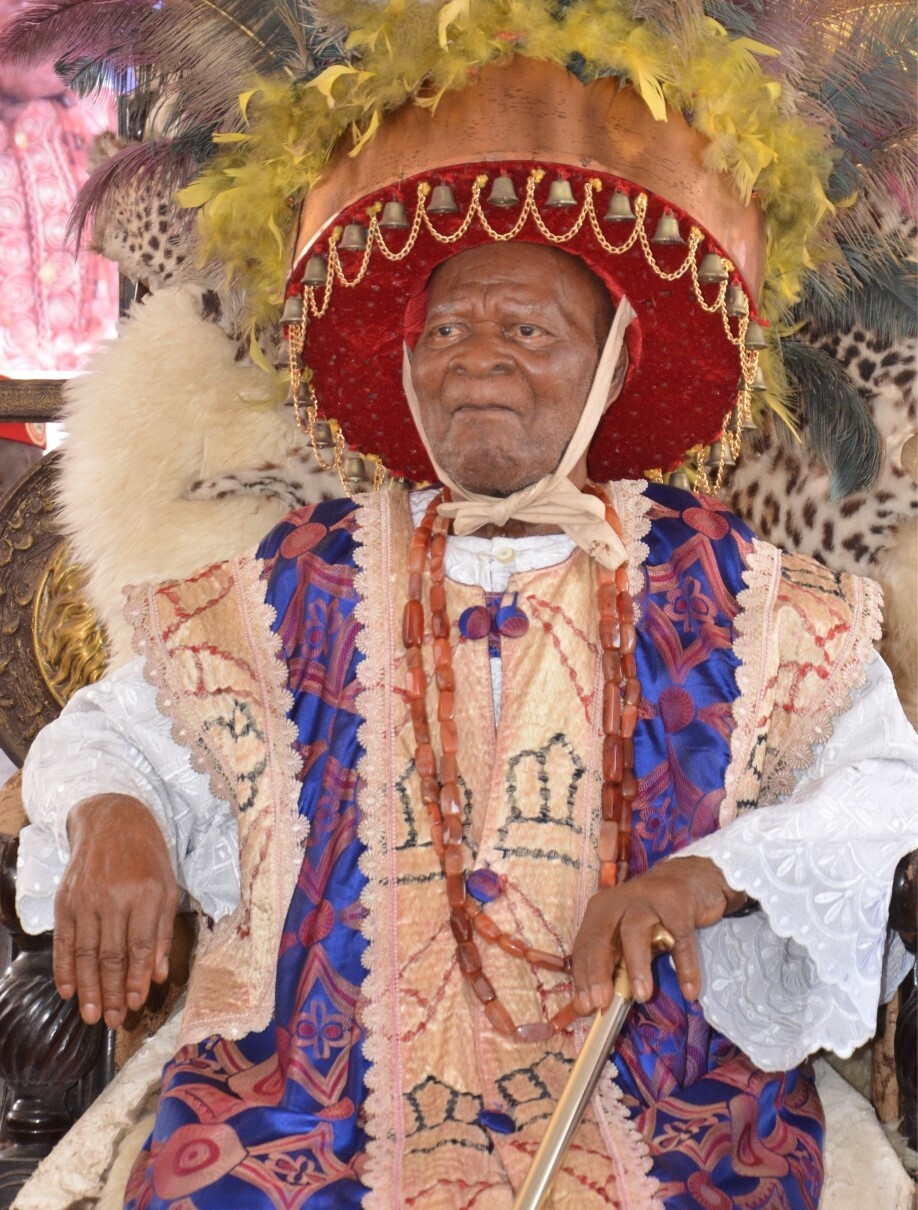
The palace in Nnewi does not announce itself with noise. There are no talking drums beating endlessly, no crowd of praise singers blocking the gate. Inside, sitting quietly in a dark Isiagu with coral beads resting on his chest, is a man who has watched Nigeria become Nigeria. His name is Igwe Kenneth Onyeneke Orizu III, JP, sobriquet called Igwe Na Eje Uka by his people. He is 101 years old. He has sat on this throne for 63 years of unbroken reign. He is Nigeria’s longest reigning monarch and perhaps its most unlikely.
That unlikely journey began not with privilege but with loss. Born into the royal house of Nnewi, he was a child of circumstance. His mother, a woman from Umuchu in Aguata, died just seven days after giving birth to him. Her death was one the old people whispered was not ordinary, but the result of palace intrigues and spiritual battles that surround every throne. So Kenneth never knew a mother’s breast. His father, Igwe Orizu II, raised him alone, and the palace women kept the infant prince alive with a mixture of boiled coconut water and milk.
The irony is striking. His grandfather, Igwe Orizu I, had been carried to the colonial courts in Onitsha in a palanquin on the shoulders of sixteen men like a god, while his own grandson would later pound the streets of Onitsha and Kano in short sleeves, hiding his princely identity, working as a transport clerk, a newspaper distributor and a civil servant. He did not want anyone to bow for him. He wanted to work.
Yet destiny does not always ask for permission. In 1962, the call came that every heir both expects and dreads. His father had passed on, and in Nnewi the burial rites for a king last one full year. For one year the town waited. By 1963, the young prince who was building offices for the National Outlook Newspaper across the old Southern Region was summoned home. What followed surprised many who are used to fractious kingship tussles in Igboland. Nnewi does not fight over its throne. Otolo produces the king. The line is clear and without rancour, a rarity that makes Nnewi different.
They put him in a motorcade to Enugu where the Premier of the Eastern Region, Dr M. I. Okpara, handed him the Staff of Office and declared that if other communities had peaceful successions like Nnewi, many problems would have been avoided. Kenneth Orizu thought he would perform the rites and return to his modest job in Benin. He never returned. What he would later describe with a half laugh that has lasted sixty three years was that he became a hostage to the throne.
What kind of hostage he became soon became clear to everyone. If you expected a monarch who only appears for festivals, you would be disappointed. For years, Igwe Orizu III opened his own court at 6am, sitting from 6 to 12 to arbitrate land disputes, family quarrels and community disagreements, breaking at noon and resuming again at 2pm. When age began to tell on him, he did what a wise civil servant would do. He created panels to help, and fearing those panels could be unfair, he created an Appeal Panel above them. So effective were his judgments that today lawyers in Anambra will tell you, if Igwe Nnewi has judged that matter, do not bother going to the High Court, for his resolution will hardly be overturned.
Yet his work was never just about law, it was also about spirit, because in Nnewi a king cannot ascend the throne until he has made peace with the gods, from Ezemewi to Idemili, and so his role has always been as much priest as prince.
It was that same spiritual courage that led him to confront what many kings before him dared not touch. For centuries, certain families in Igboland were branded Osu, outcasts forbidden to marry, to buy, to belong, with their children and their children’s children bearing the same mark. Orizu III decided to end it. He did not simply issue a decree from the palace. He sat with elders, argued, negotiated and walked the town until he won their trust. He would point to Nkwo Market and tell them that the very land they now trade on was once occupied by the so called outcasts, yet today freeborn and those once called Osu mix freely. Today, as he himself says, anyone who still believes in Osu in Nnewi does so on his own. For him, leadership was never a crown worn for show, it was a responsibility carried with conviction.
That conviction is what pushed him beyond the boundaries of Nnewi. In 1988, when General Ibrahim Babangida called on traditional rulers to foster national unity, many kings stayed in their palaces. Orizu III left his. He entered a car and embarked on a fraternal tour of Nigeria that took him to Gboko, Makurdi, Maiduguri, Kano, Sokoto, Zaria, Lagos, Jos and Minna. It was less than two decades after the civil war, and here was an Igbo king walking into the palaces of Emirs who had been on the other side. He was not stoned. He was embraced. Emirs welcomed him, governors received him, commoners cheered him. It was not politics, it was healing. A quiet man from a small industrial town showing Nigeria that royalty could reconcile without speaking.
Under that quiet leadership, Nnewi itself transformed. Today it is loud with the sound of machines making motorcycle parts, of shops shipping goods across West Africa, a town people now call the Japan of Africa. But beneath that noise is the old, steady system he maintained, fifty one wards where levies are shared fairly, where no ward feels cheated and where disputes are settled before they ever reach Awka. His only prayer throughout his reign has remained the same, that Nnewi becomes one of the most progressive townships in Nigeria, and by many measures, it already has.
And when asked why only Otolo produces kings and not Uruagu, Umudim or Nnewichi, he answers with the same self deprecation that has defined him, saying look at me, an ugly man like me, I am not qualified by looks, money or education, I only became king because our forefathers put a system in place. For him, kingship has never been about charisma, but about continuity, character and culture.
Perhaps that is the most moving part of his story, not that he reigns, but how he has reigned. Walking to community meetings on foot, working long hours at the palace court, farming to support his family, hiding his princely identity just to live as a clerk in Kano. For a man like that, kingship was never an entitlement. It was and remains a vocation.
Now at 101, after 63 years on the throne, he is no longer the lone infant fed with coconut water in the absence of a mother. He is the father of a kingdom, the custodian of its memory and the quiet architect of its modernity. There may never again be a king quite like Igwe K. O. N. Orizu III, and that may be the truest testament of all.
They will say at every Ofala, may your reign last forever. In legacy, it already has.